Frozen Pipe Cleanup in Cranston, RI
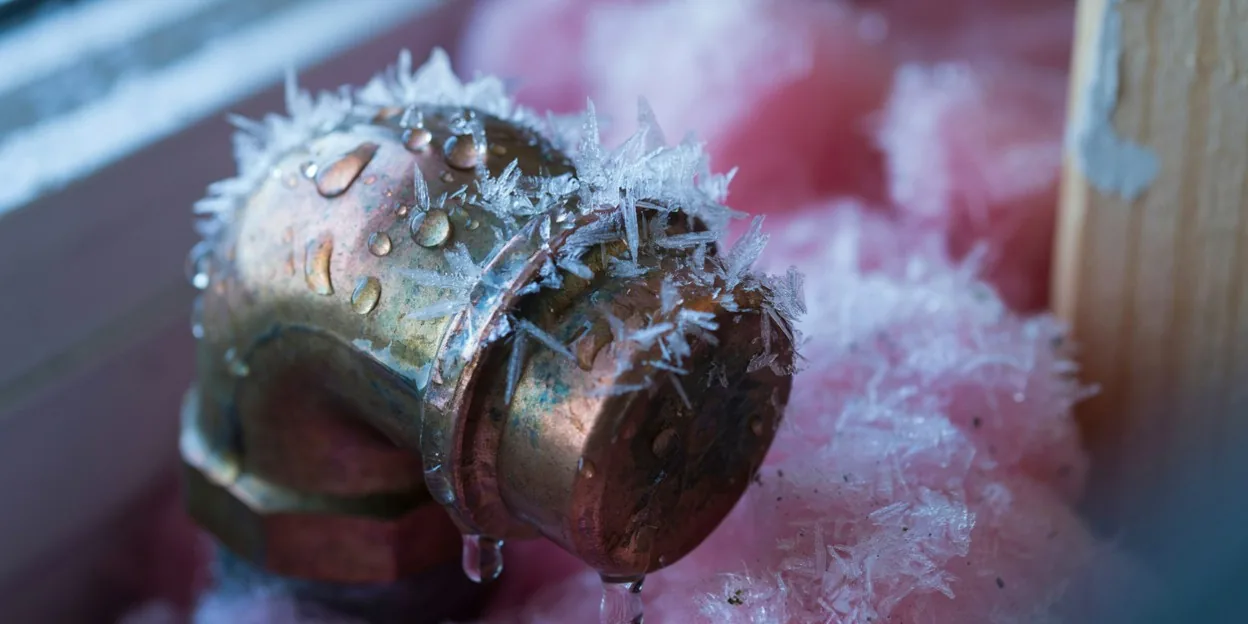
The forecast said minus 9 on Saturday morning with a wind chill in the minus 30s, and the kitchen faucet on the porch side of the house slowed to a trickle. By Sunday afternoon the temperature was back above freezing and there was water running down the inside of the porch wall and pooling on the basement floor below it. We connect you by phone with an independent local provider who cleans up after a frozen pipe in Cranston, Providence, and the towns around them.
Working out how long the thaw ran before you found it
First the crew checks that the main is shut, and then they pin down how many hours the water was running. While the ice is still in the line, nothing comes out of a frozen pipe. It leaks when it thaws, and if the thaw came Sunday morning and you found it Sunday afternoon, that is hours. If the house was empty for a long weekend, that is days. The number shapes everything else.
Then they extract the standing water and meter every material in the path. Frozen-pipe losses start in the coldest place the plumbing runs: an enclosed porch, an exterior wall, a garage, a crawl space under an addition, an uninsulated basement corner. The water follows the framing down to the sill and into the basement. They look there early, because that is where it ends up.
Keep the main shut until every split is found
Shut the main valve and leave it shut until a plumber has found every split. Copper that froze in one spot often froze in three, and the other sections let go as the house warms. Turn the heat up. Open cabinet doors under sinks on exterior walls and the access panel behind the tub.
Keep torches and heat guns away from the pipe. Get rugs and cardboard boxes up off the wet floor. Take photos of the wall, the floor, and any ice, then call us. The plumber repairs the pipe. The cleanup crew dries the house, and they often work the same day.
Sill plates dry in place; the wet wall usually opens
Framing, sill plates, and subfloor usually dry in place if the crew reaches them within a few days. Plaster and drywall on the wet wall, and the insulation behind it, usually come out because the insulation held the water against the studs. Cabinet bases, laminate floors, and carpet pad typically go.
Hardwood is the question. A floor that got wet for a few hours can often be dried with mats. A floor that sat wet through a long weekend in a cold house has usually cupped past saving. Not one board comes up until the crew has metered the floor. Once the water is out, structural drying is the rest of the job, and if the split was in a pipe that was not frozen at all, burst pipe water damage covers that case.
February in an old Rhode Island house: porches, garages, and exterior walls
On February 3 and 4, 2023, Providence dropped to minus 4 and then minus 9, with a wind chill of minus 33 recorded early Saturday morning, the third coldest on record. Pipes split across the county that weekend, and most of them were in the same places: enclosed porches that were plumbed for a half bath decades after they were built, kitchen supply lines in exterior walls with no insulation, hose bibs that were never drained, and baseboard heating loops in rooms that were closed off to save oil.
The housing stock is the reason. The 1920s and 1930s capes and bungalows of Edgewood, Auburn, and Eden Park were built before wall insulation was common, and the 1950s ranches of Garden City and Oaklawn have plumbing in slab-edge and garage walls. Triple-deckers in Providence run supply lines up through unheated stairwells. A vacant unit or a snowbird's house with the thermostat set low is the classic loss, because nobody hears the water.
A pipe that split from freezing usually falls under the sudden-loss language in a homeowner policy. Some apply a different rule when the house was unheated or unoccupied, and a few require that the heat stay on or the water be shut off while the home is empty. This site has no way to know what your own policy requires, so check the wording with your adjuster. Ask the crew to record when the water was found, the readings on the first visit, and the photos so the timeline is on paper for your adjuster.
When you call about a frozen pipe that split
Tell us when you last had water pressure, when you found the leak, and whether the main is shut. Say which wall or room the water came from, whether the house was empty, and whether the basement below is wet. Let us know if you already have a plumber coming. Call (401) 443-9638 now and tell us what you see.