Burst Pipe Water Damage in Cranston, RI
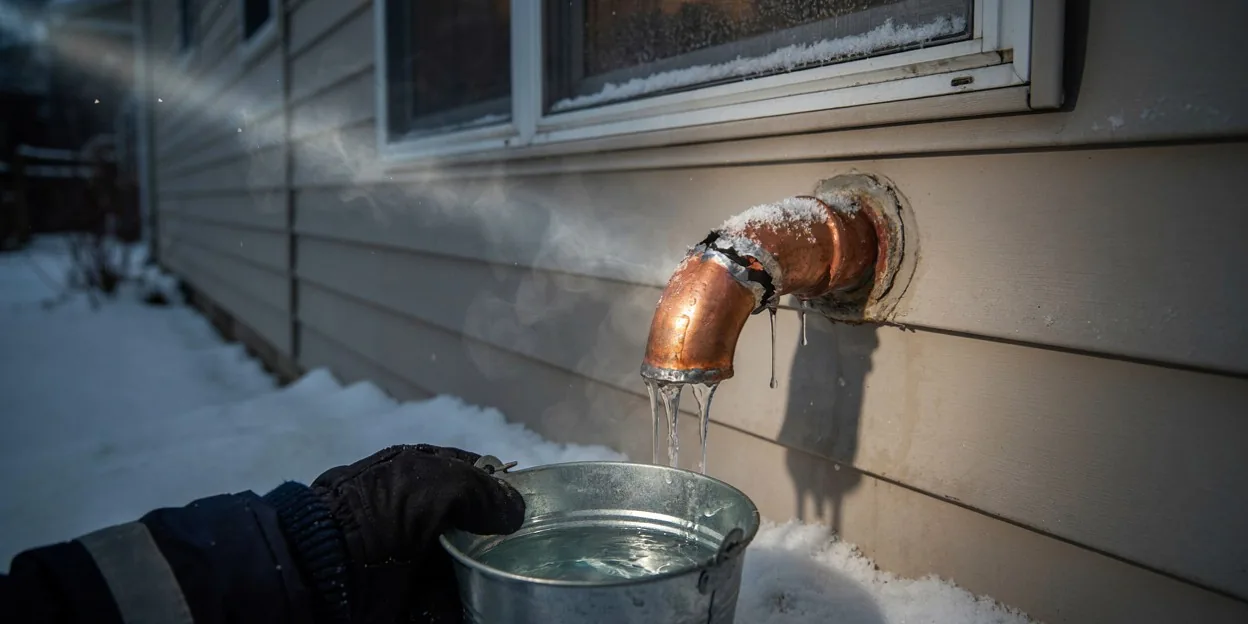
You came home from work to the sound of running water and found the kitchen ceiling bowed and dripping. The supply line to the second-floor bathroom had let go sometime after breakfast, and it ran for eight hours through the floor, the ceiling, and down the wall into the basement. We connect you by phone with an independent local provider who cleans up after a burst pipe in Cranston, Providence, and the towns around them.
What the crew does first
The crew confirms the water is off, then follows the path. A supply line under pressure puts out several gallons a minute, and in eight hours that is a lot of water moving through a house. They start at the pipe, meter the wall it sat in, then the floor, then the ceiling below, then the basement where it all ends up.
Then they extract what is standing and open what has to open. A sagging ceiling is drained and taken down before it comes down on its own. A wet wall cavity gets a hole behind the baseboard for a meter and, later, for air. The first visit ends with a map of every wet material in the house, not just the room where you found the water.
What to do in the next hour
Shut the main valve. In most Cranston and Providence houses it is on the basement wall near the meter; in a triple-decker each unit may have its own shutoff as well. Turn off the breaker for any room with a wet ceiling or wet outlets. Stay out from under a bulging ceiling.
Move furniture and rugs off the wet floor. Put a bucket under the drip and poke a small hole at the low point of a sagging ceiling only if you can do it from the side, not from underneath. Take photos of every room the water reached, then call us. Fixing the pipe is a plumber's job. Drying the house is the cleanup crew's job, and they often work the same day.
What is usually saved and what is not
Framing, subfloor, and plaster on lath usually dry in place if the crew gets to them quickly. Drywall that got wet from a short-lived break can often be dried; drywall that sagged or held water for a day comes out. Insulation in a wet wall or ceiling almost always comes out. Hardwood that is caught early can often be dried with mats. Cabinet bases, laminate floors, and carpet pad usually go.
The ceiling below the break is its own job, and ceiling water damage repair covers what happens to a plaster or drywall ceiling after the leak above is stopped. After the extraction, structural drying runs until the readings say the framing and floors are back to normal.
Providence County notes: old copper, old galvanized, and long runs
A lot of the plumbing in Cranston and Providence is old. The 1920s two-families and triple-deckers were plumbed in galvanized steel that has rusted from the inside for a century; the 1950s capes in Garden City and Oaklawn got copper that has been repaired in pieces ever since. Washing machine hoses, toilet supply lines, and water heater connections fail on their own schedule. And a failure on the third floor of a triple-decker is a three-story water loss.
Pressure matters too. Providence Water serves most of the county from the Scituate Reservoir, and houses at the bottom of a hill in Edgewood or Washington Park see higher pressure than houses on the ridge in Elmhurst. Higher pressure means more water per minute out of a split line and a fitting that lets go sooner. If the pipe failed because it froze, see frozen pipe cleanup, because the timeline and the insurance questions are different.
Many policies cover a burst pipe as a sudden loss. Some exclude damage from a leak that was slow and long-standing. Ask the crew to record when the water was found, the first readings, and the photos so the timeline is on paper for your adjuster.
Calling about a burst pipe
Tell us where the pipe is, whether the water is shut off, and how long you think it ran. Say which floors are wet, whether a ceiling is sagging, and whether the basement got it too. Call (401) 443-9638 now and tell us what you see.